Installing a smart water shut off valve in Singapore protects homes and commercial spaces from sudden flooding. Pipe bursts, split washing machine hoses, and choked aircon trays cause heavy damage within minutes. Conventional plumbing relies entirely on manual valves. Modern smart home hardware cuts water flow automatically when moisture sensors detect standing water.
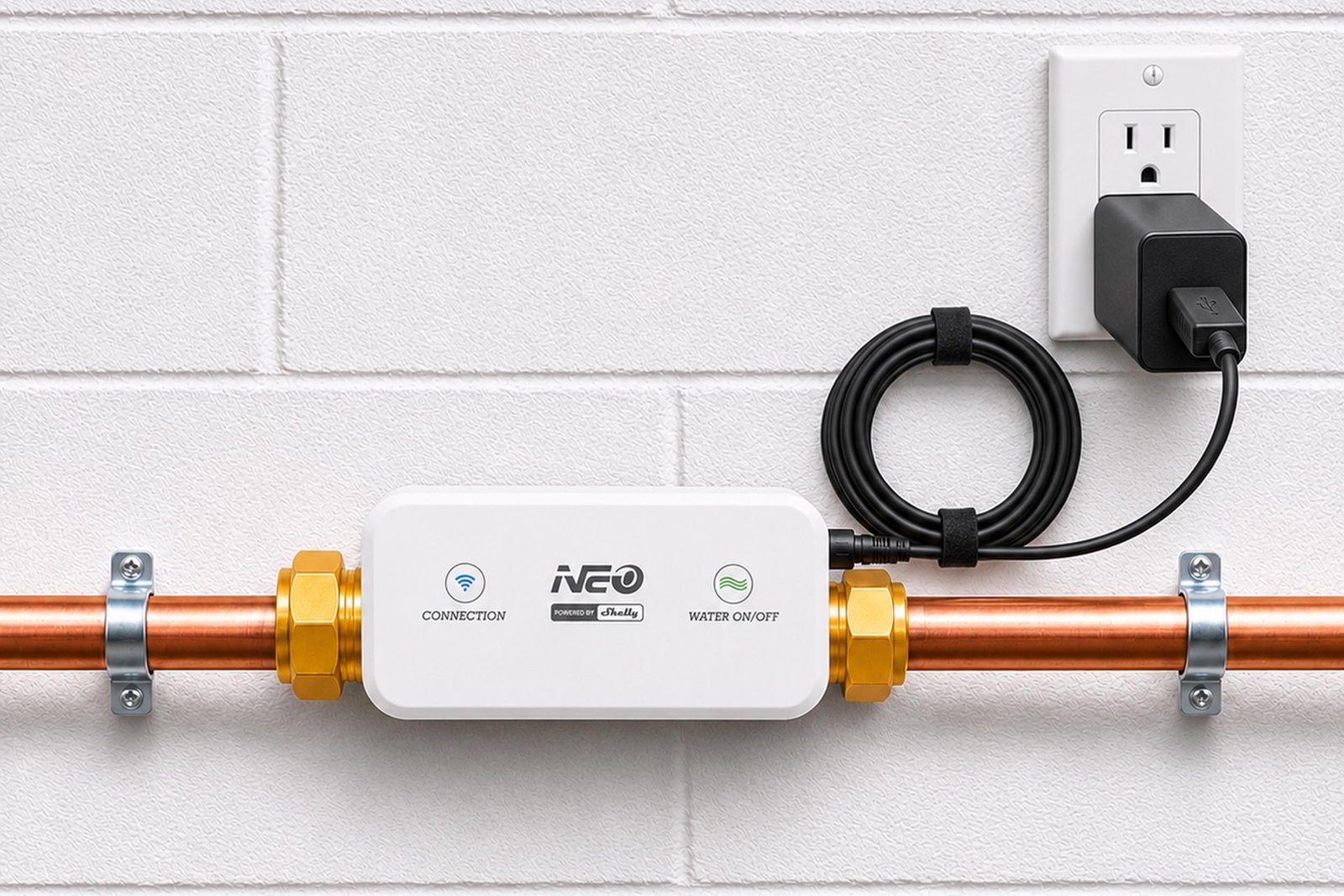
Recent reporting by The Verge shows how manufacturers like Shelly are expanding smart home flood protection. Their new brass motorized valve pairs with wireless leak sensors. It closes the main supply line in about twelve seconds. Built-in ultrasonic sensors also track water flow rates, line pressure, and water temperature. Deploying these devices locally requires proper attention to pipe threading, electrical cabling, and wireless range.
Why a Smart Water Shut Off Valve in Singapore Matters for Homes and Offices
Water leaks in Singapore often strike when occupants are at work or traveling overseas. In landed houses, a split flexi-hose under a top-floor basin can soak through false ceilings. It ruins parquet floors and shorts out light fixtures below. In commercial offices, overhead fan coil unit (FCU) drip trays often choke with dirt and algae. Overflowing trays dump water onto office desks and network server cabinets during weekends.
A smart water shut off valve in Singapore stops flooding before damage spreads. Wireless sensors placed in wet zones detect moisture immediately. The motorized valve turns the pipe ninety degrees to cut main pressure. This fast action isolates the leak to the water already inside the branch line.
Hardware Architecture and Pipe Thread Considerations
Choosing a durable motorized valve body is essential for long-term reliability. Primary main valves should use lead-free brass bodies rated IPX7 or higher. High water resistance shields internal motors and circuit boards inside humid utility shafts. Plumbing standards also require careful verification during site planning.
Many imported valves feature American NPT tapered threads. Singapore water piping uses British Standard Pipe (BSP) parallel threads on copper and PPR pipes. Connecting NPT fittings directly to BSP unions causes cross-threading and persistent micro-leaks. Experienced technicians install precision brass adaptors with high-density sealing tape to secure a leak-free joint.
Ultrasonic metering also provides daily diagnostic value. By detecting continuous micro-flow during quiet hours, the system spots hidden toilet leaks or wall pipe cracks before utility bills rise.
Power Delivery and Low-Voltage Cabling Challenges
Power supply is a common hurdle when installing automated valves in local properties. Master water meters and gate valves usually sit in utility risers, yard cabinets, or under sinks. These locations rarely have accessible 230V power sockets. Running an ordinary mains extension cord into wet plumbing areas creates an electrical hazard.
The clean engineering solution uses low-voltage DC power cabling. Technicians run 12V or 5V DC lines from a nearby dry socket inside slim PVC trunking. To protect against power trips during lightning storms, the valve connects to an inline DC battery backup. This keeps the motorized ball valve functional during unexpected power outages.
Smart Home Automation and Network Reliability
Reliable valve actuation depends on dependable communication between sensors and the central motor. Singapore homes have thick reinforced concrete walls that weaken 2.4GHz Wi-Fi signals. A weak Wi-Fi signal between bathrooms and utility risers can delay valve response.
Professional setups link moisture sensors and valves using local Zigbee, Matter, or hardwired Ethernet bridges. These protocols execute automation routines locally without depending on cloud servers. When sensors detect water, the shut-off command triggers instantly. The system pushes instant mobile notifications to homeowners. It can also trigger CCTV cameras so property managers can inspect the scene remotely.
Practical Installation and Synoviz Engineering Support
Deploying automated flood protection involves mechanical plumbing, electrical cabling, and smart home system integration. Property owners can explore technology solutions through our commercial and residential solutions and dedicated engineering services.
Synoviz provides end-to-end technical support across Singapore. Our teams survey pipe dimensions, install thread adaptors, and run neat low-voltage power lines. We also calibrate wireless sensors across kitchens, pantries, and server rooms. Each system undergoes pressure testing and simulated leak trials to confirm rapid valve closure.
To protect your residential property or commercial facility from costly water damage, contact the Synoviz WhatsApp at +65 8933 1660 or email sales@synoviz.com for on-site consultation and deployment planning.