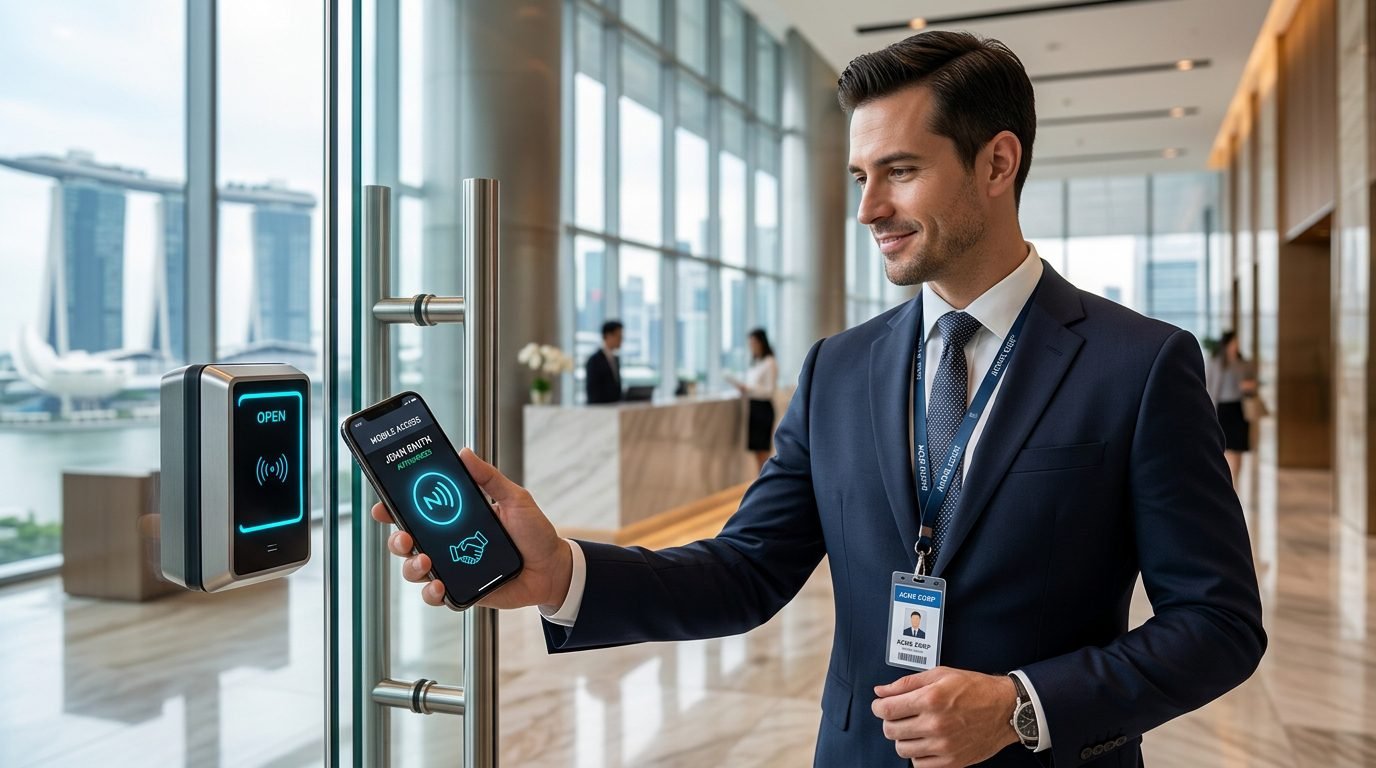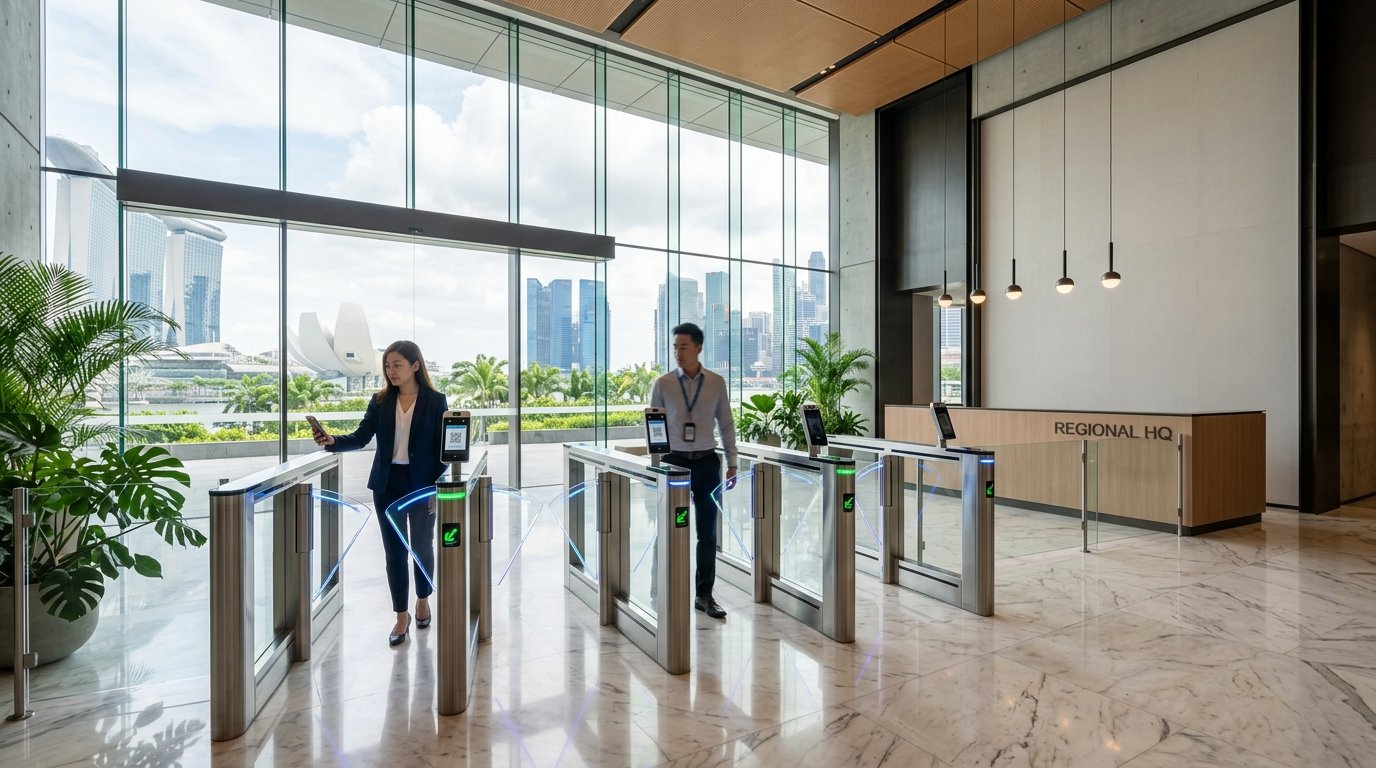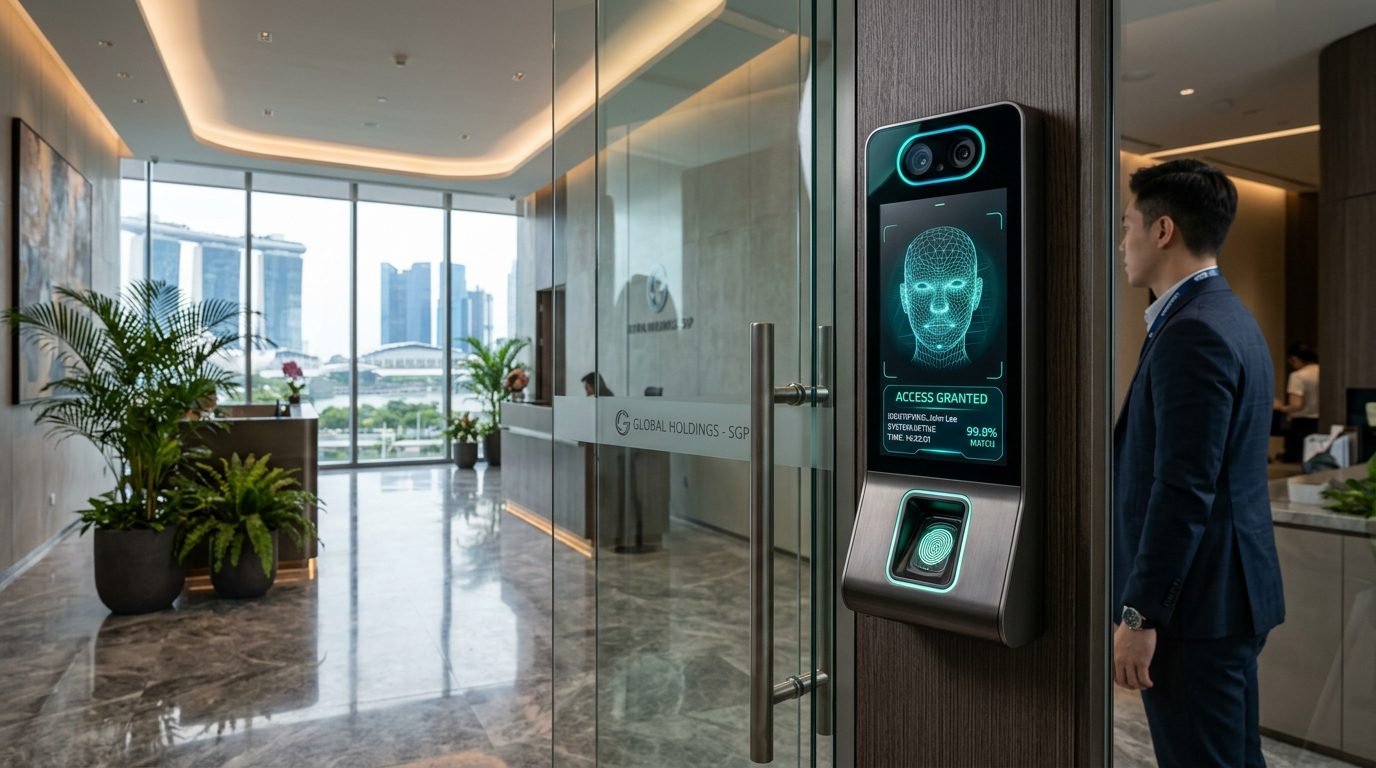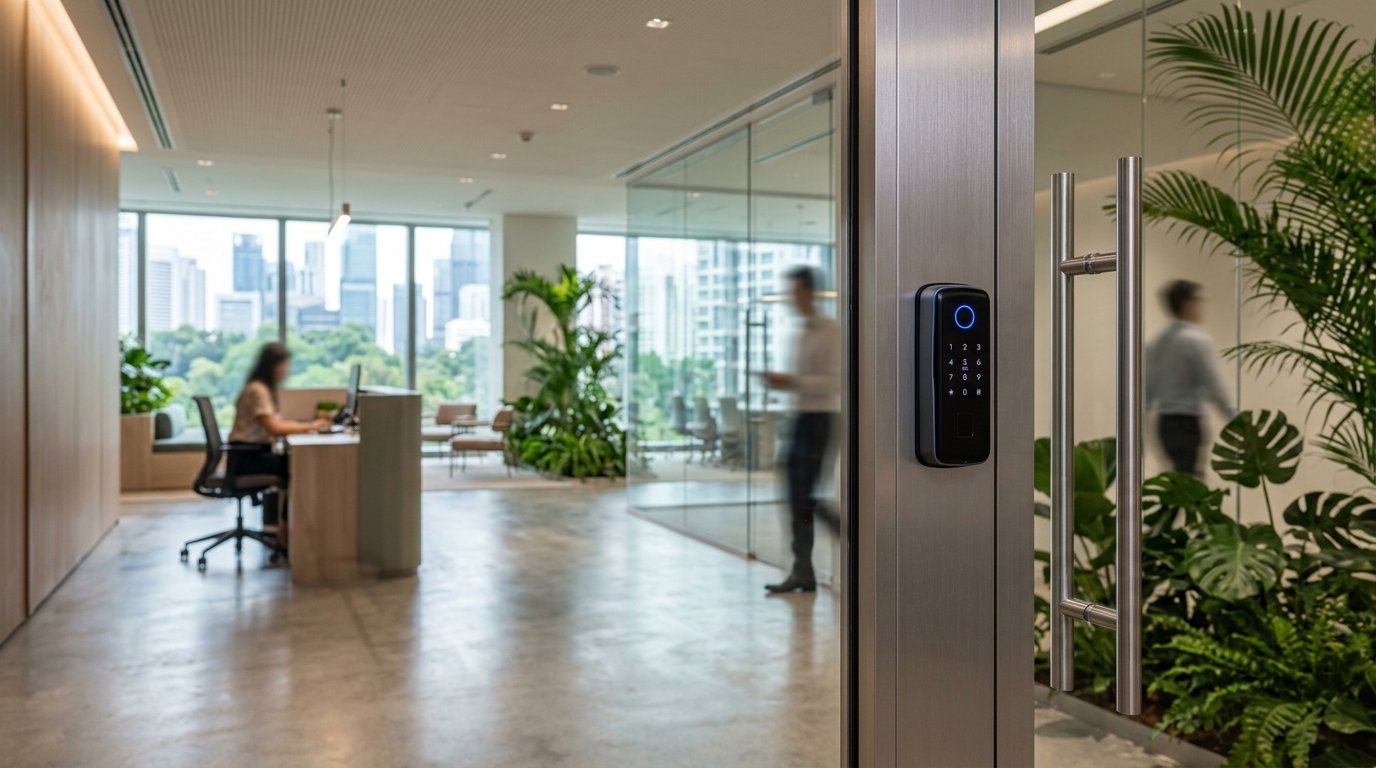
Commercial door access is moving away from basic RFID cards toward precision wireless hardware. Recent developments in ultra-wideband (UWB) technology, combined with PIN keypads and unified Wi-Fi gateways, allow users to unlock office doors hands-free as they approach. While consumer marketing presents this transition as effortless, deploying reliable smart door access in Singapore commercial buildings requires practical engineering.
Physical Mounting on Frameless Glass and Commercial Timber Doors
Most commercial offices across Singapore feature frameless glass doors at the reception and solid core timber doors for server rooms or executive suites. Each door type presents distinct physical mounting requirements:
- Frameless glass doors: U-bracket hardware is required to clamp electromagnetic locks or electric drop bolts onto 10mm to 12mm tempered glass without drilling holes. Surface-mounted wire trunking must run along architectural mullions to keep cables protected and out of sight.
- Solid timber doors: Mortise smart locks sit recessed inside the door leaf, requiring precise routing to align the latch bolt with the strike plate. Any building settlement or hinge sag can misalign the mechanism, causing the motor to jam.
Continuous DC Power versus Battery Dependency
Many smart deadbolts sold for residential use rely on standard AA batteries. In a busy Singapore office where a main entrance cycles several hundred times a day, alkaline batteries deplete within weeks. Frequent low-battery warnings disrupt daily operations and risk locking staff out after long weekends.
Commercial installations overcome this by connecting the smart lock and access controller to a continuous 12V or 24V DC power supply. An uninterruptible power supply (UPS) with sealed lead-acid batteries sits inside the ceiling plenum or an adjacent electrical riser. If the facility experiences a localized power trip, the backup battery maintains door security for four to eight hours while ensuring doors remain mechanically operable for staff exiting the premises.
Overcoming Wi-Fi Dead Zones in Reinforced Concrete Buildings
Smart locks and UWB proximity readers rely on network bridges to communicate with centralized management portals. In Singapore commercial shophouses and industrial buildings, reinforced concrete walls and tinted acoustic glass heavily attenuate wireless signals. A gateway located in a back-office server rack often fails to maintain a stable link with a front door lock only fifteen meters away.
Experienced technicians run dedicated Cat6 structured cabling from the core network switch to a ceiling-mounted Wi-Fi access point or IoT gateway directly above the reception lobby. This dedicated link guarantees that audit logs, temporary visitor PIN codes, and remote unlock commands transfer instantly without latency or dropped connections.
Tailored Door Access Solutions with Synoviz
Synoviz designs, installs, and maintains commercial door access systems across Singapore. Our team handles every phase of deployment:
- On-site structural assessment of glass, timber, and metal doors.
- Concealed wiring, cable trunking, and dedicated power supply integration.
- Multi-credential setup combining UWB mobile entry, PIN keypads, and physical bypass keys.
- Preventive maintenance and rapid troubleshooting for mechanical alignment and electronic controllers.
To arrange a physical site survey or discuss door access upgrades for your workplace, contact the Synoviz technical team at +65 8933 1660 or email sales@synoviz.com.